
The machine writes the code.
The human decides
Daniel Bachan on stage at ZSLiT nr 1 for the finale of "Sztuczna inteligencja w edukacji oraz programowanie w praktyce", under the patronage of the City of Warsaw. Around a hundred people in the hall, and one question to answer: what has AI actually done to a programmer's job?
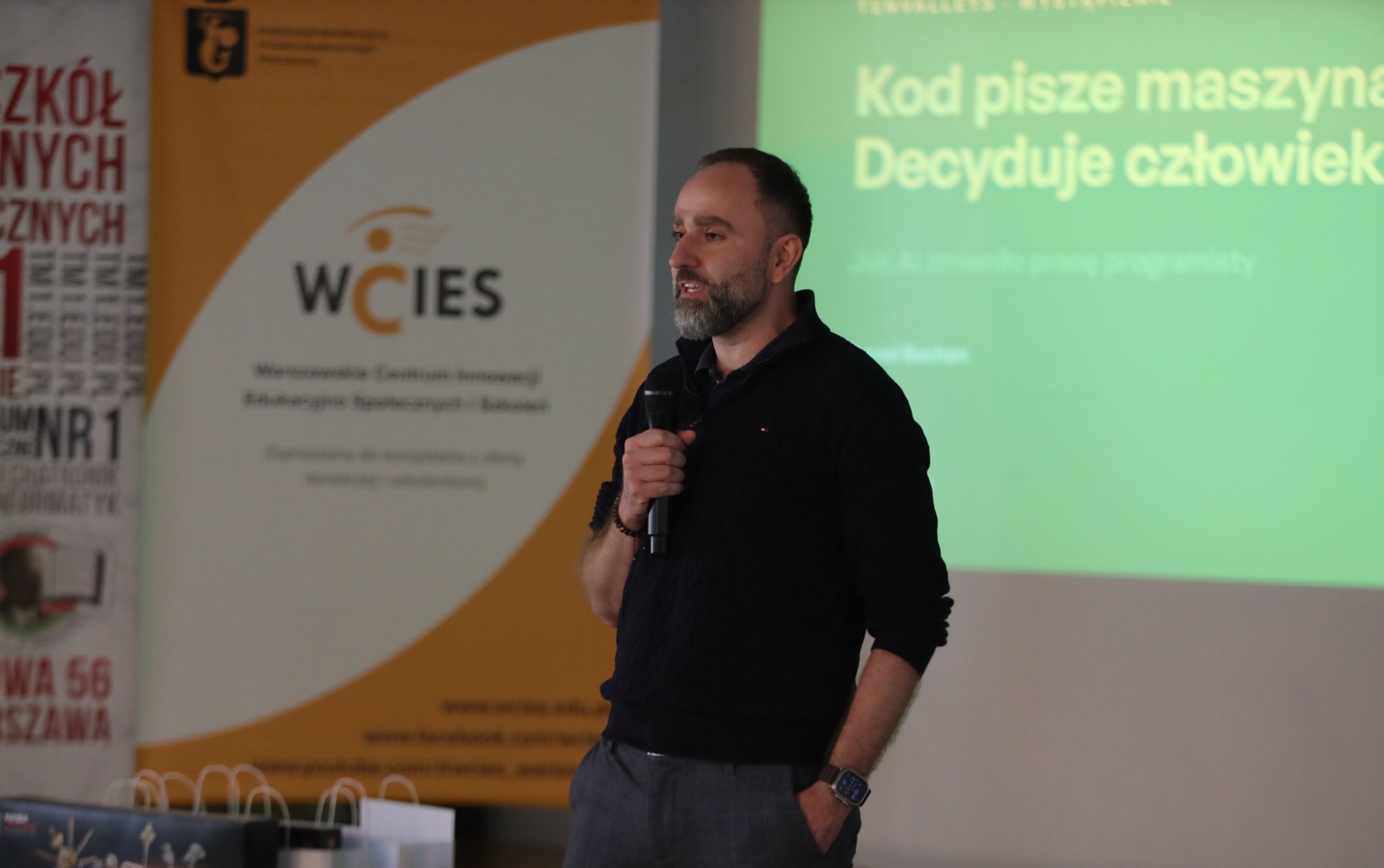
The school asked for someone who could spend twenty minutes on what AI has done to programming, from a practitioner, not from a keynote deck. Our CEO Daniel Bachan took it, and built the talk around a single distinction: what stopped mattering, and what became priceless.
What stopped mattering is typing code. What became priceless is knowing what to build, being able to direct the machine, and navigating complexity no single person can hold in their head. Work that used to need a specialist now gets prototyped in days instead of months, and the job shifts from repetitive execution to creative decisions. The programmer stopped being the operator of the machine and became its architect and conductor.
The prediction everybody laughed at
In March 2025 Dario Amodei said publicly that within a year we would live in a world where AI writes essentially all of the code. It was widely mocked. The talk's uncomfortable middle was simply: this is how we work now, and it happened on schedule.
But not one line of it exists without a human decision. The machine types; we decide what should exist.
A multiplier that works both ways
The one shadow in an otherwise optimistic talk, and the part the room reacted to most: AI amplifies whatever you already have. Good engineering culture compounds faster. Weak foundations collapse faster. A programmer who understands what they are approving writes far safer code with AI than someone who only clicks accept, the tooling does not turn an amateur into a master.
Which is the honest answer to the anxious question in every school hall: there will be more programmers needed, not fewer. The amount of software still waiting to be written is enormous. What changed is which part of the work carries the value.
Two perspectives on one stage
Daniel was not the only speaker. Dr Bartosz Naskręcki covered the same shift from the academic side, which made the afternoon more useful than a single talk would have been: the room got the research view and the "this is what our week looks like" view back to back, and could hear where the two agree.
Thank you to everyone who stayed and listened. The finale ran alongside a hackathon for secondary-school students, decided the same afternoon, congratulations to every team that took part.
Tell us your story. It could be next.
A few lines about the work is enough. If it fits, we will set up a call from there.
Write to us