
How do you teach programming when AI writes the code?
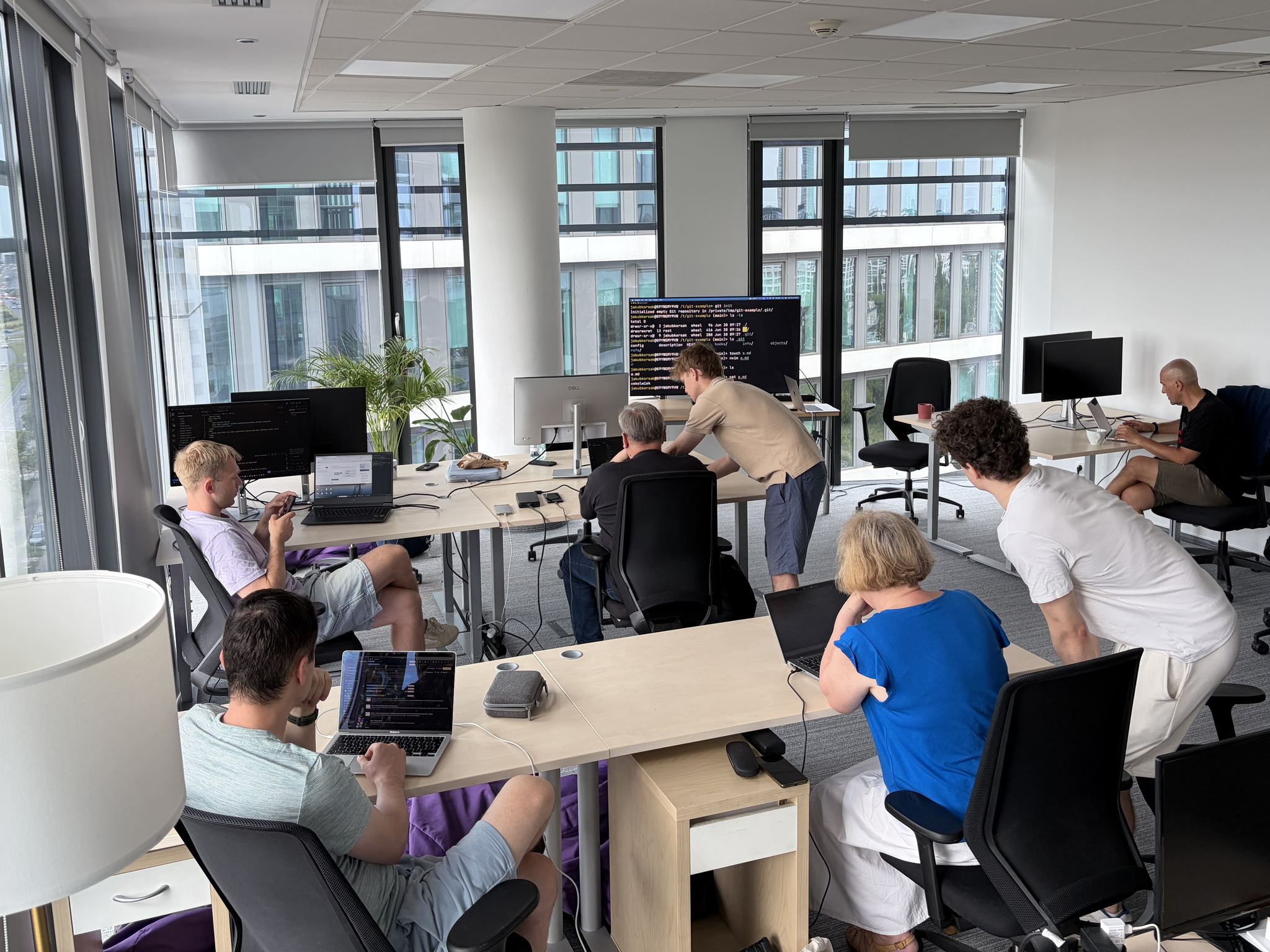
Two days with eight IT teachers from ZSLiT nr 1. We came in with an answer we were fairly sure of and left with a sharper one: stop grading the file, start grading the defence.
The premise of every programming class is that the code a student hands in is evidence they understood something. That premise is gone. A model writes a working solution to a first-year assignment in four seconds, and it writes it better than most of the class. Every teacher in the room already knew this. The question they brought was not how to catch it, but what to assess instead.
So we did not spend two days on prompting tricks. We spent them on the two things that survive: whether a student can explain the code in front of them, and whether they can work the way an actual engineer works.
Repositories before syntax
Every teacher left with their subject living in a Digital Campus repository: assignments as issues, student work as branches, feedback as review comments. It is the workflow their graduates will be dropped into on day one of a real job, and it happens to be the only environment where you can see how a solution arrived, not just that it did.
The unglamorous half of day one was Git. Not the theory, the muscle memory. Branch, commit, open a pull request, get told your commit message is useless, fix it.
Grading a defence, not a file
Day two rebuilt assessment around a short oral defence: the student walks through their branch, gets asked why this loop and not that one, what breaks if the input doubles, which part the model wrote and why they kept it. Honest AI use stops being cheating and becomes something you can examine.
Teachers wrote their own rubrics for it that afternoon, and three of those rubrics are already in this term's lesson plans. The first cohort of "Programista AI" will be assessed this way from September.
Two days is not enough to rebuild how a subject is taught, and it was not meant to be. What it produced was a shared starting point: the same tools, the same workflow, and one agreed principle about what a grade is for.
We are meeting again before 1 September: a short refresher after the summer, so everyone walks into the new school year prepared and with the right energy for it.
Tell us your story. It could be next.
A few lines about the work is enough. If it fits, we will set up a call from there.
Write to us